
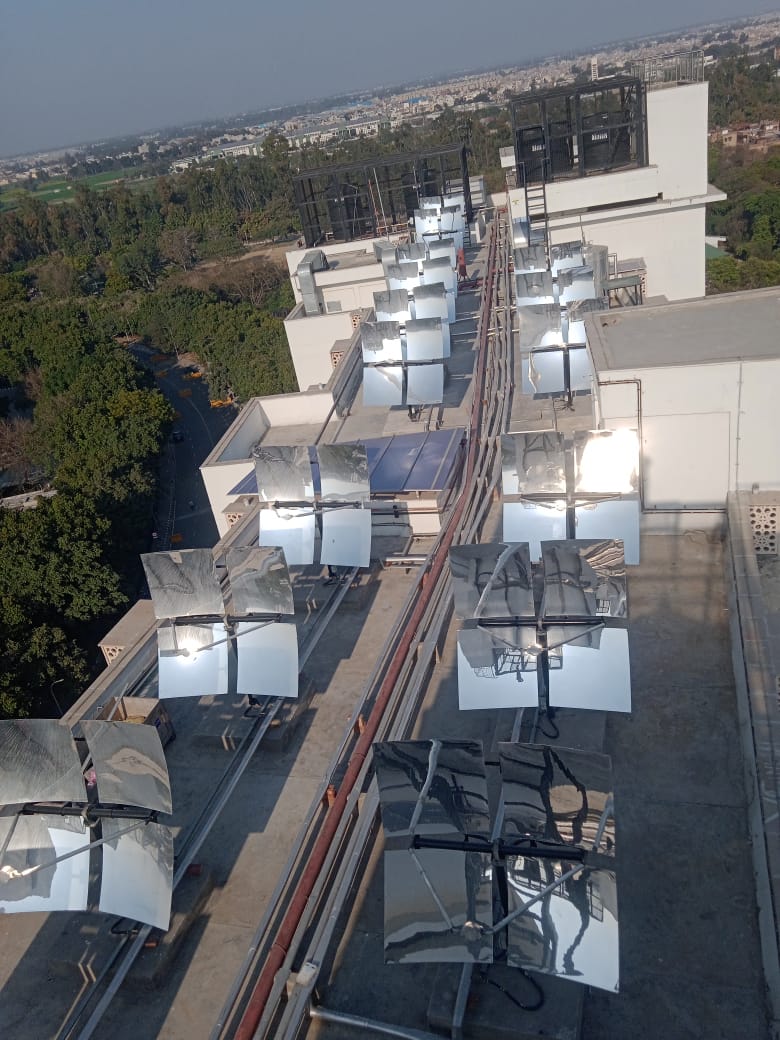
The global race for clean, reliable energy has entered a new phase. While traditional solar panels have made remarkable strides, industries with high-temperature needs are rapidly. Turning toward a different solution: concentrated solar thermal (CST) dish systems. Unlike photovoltaics, CST dishes use mirrors to concentrate intense solar heat.
Generating temperatures high enough not just for electricity, but for the very processes that power heavy industry. This isn’t a fringe technology anymore. The concentrated solar power (CSP) market is experiencing a major resurgence. Projected to grow at over 17% annually and reach a staggering $212 billion by 2032. The reason for this explosive growth?
Thermal dishes are uniquely solving the most critical problem in the renewable transition: delivering clean, dispatchable power and industrial heat, day or night. Why Industries Are Switching to Concentrated Solar Thermal Dishes Faster Than Ever.
1. The Anatomy of a Modern Solar Thermal Dish
At its core, a concentrated solar thermal dish is a feat of precision engineering designed to capture and intensify sunlight. Here is how this system transforms ordinary sunlight into a powerful industrial tool:
-
The Reflective Dish: The system starts with a large, parabolic-shaped dish, coated in a highly reflective material like polished aluminum. This shape is crucial—it acts like a giant satellite dish for sunlight, collecting and focusing every ray onto a single, precise point.
-
The Receiver: At the focal point sits the receiver. This is where concentrated sunlight becomes usable heat, with temperatures routinely exceeding 600°C and even reaching beyond 1,000°C in advanced systems. The receiver contains a heat-transfer medium, which historically was a fluid like thermal oil or molten salt.
-
Advanced Heat Transfer Media: The real game-changer in modern systems is the shift to engineered solid particles, such as durable ceramic beads. A 2022 study by the German Aerospace Center (DLR) found that next-generation solid particles outperform traditional molten salts in critical areas: they offer higher heat capacity, superior mechanical endurance at extreme temperatures, and excellent flowability, making systems more efficient and reliable.
-
The Tracking System: To maximize energy capture, the entire dish is mounted on a sophisticated two-axis tracking system. This allows it to follow the sun’s precise path across the sky from sunrise to sunset, ensuring optimal focus and energy collection throughout the day.
2. Key Drivers Behind the Industrial Shift
Several converging factors are accelerating the adoption of CST dishes across global industries.
Unmatched Thermal Energy Storage: The single most compelling advantage is thermal energy storage (TES). CST plants can store excess heat in cost-effective materials like molten salt, sand, or ceramic particles for use when the sun isn’t shining.
This provides “dispatchable power“—clean electricity that can be generated on demand to meet evening peak loads or ensure 24/7 industrial operations. The International Energy Agency notes that by 2050, modern CSP could be the cheapest way to store solar energy for 8 to 24 hours, directly replacing gas and coal for nighttime power.
Decarbonizing “Hard-to-Abate” Industrial Heat: Sectors like cement, steel, chemical production, and mining require continuous, high-temperature heat, which has been notoriously difficult to electrify. CST dishes deliver clean, high-grade process heat (above 400°C) directly, offering a viable path to decarbonize these essential industries.
Projects are already underway, such as a new solar-thermal plant at a cheese production facility in California, demonstrating practical industrial integration.
Grid Stability and Hybridization: As grids become saturated with variable wind and solar PV, the need for stable, predictable generation grows. CST with storage acts as a perfect grid stabilizer. Furthermore, it can be seamlessly hybridized with other power sources like photovoltaics, natural gas, or geothermal to create flexible, resilient power plants.
A PV array can generate cheap electricity during the day, while the CST system’s stored heat provides power through the night.
Strong Governmental and Policy Support: Global climate commitments are translating into tangible support for CSP technologies. Governments are setting ambitious renewable targets, offering financial incentives, and funding crucial research and development.
Notably, the U.S. Department of Energy aims to drive the cost of CSP down to $0.05 per kilowatt-hour for plants with over 12 hours of storage, making it directly competitive with fossil fuels. Major projects are advancing worldwide, from the United States and Australia to large-scale installations in China, Morocco, and the UAE.
3. Real-World Applications Transforming Industries
CST dishes are moving beyond theory into practical, revenue-generating applications that are reshaping business models.
-
Utility-Scale Electricity Generation: Paired with a Stirling engine or turbine at the receiver, dishes can generate 5 to 25 kilowatts of power per unit. When deployed in large arrays, they form significant power plants. The key advantage is the ability to generate electricity after sunset using stored thermal energy, providing critical capacity during peak demand periods.
-
Industrial Process Heat: This is perhaps the most transformative application. CST systems supply direct heat for:
-
Chemical Production and Mineral Processing: Providing the high temperatures needed for reactions and material refinement.
-
Food Processing: Applications like steam generation for drying, pasteurization, and cooking in facilities like the Saputo Cheese plant in California.
-
Water Desalination: Using concentrated heat to evaporate and purify seawater, a vital solution for arid, sunny regions.
-
-
Production of Solar Fuels: Advanced research is using the extreme heat from CST dishes to drive thermochemical reactions. This includes producing green hydrogen through solar-powered water splitting, creating a sustainable fuel for transportation and industry.
4. The Competitive Edge Over Other Renewables
To understand why CST dishes are gaining favor, it’s helpful to compare them directly with other common technologies.
| Feature | Concentrated Solar Thermal (Dish) | Solar Photovoltaic (PV) Panels | Wind Power |
|---|---|---|---|
| Primary Output | High-temperature heat & dispatchable electricity | Electricity only | Electricity only |
| Energy Storage | Built-in, low-cost thermal storage (hours to days) | Requires separate, expensive battery systems | Limited to battery or other external storage |
| Dispatchability | High – can generate power/heat on demand | Low – dependent on immediate sunlight | Low – dependent on immediate wind |
| Best Application | Industrial process heat, 24/7 power generation | Residential/commercial daytime electricity | Large-scale electricity in windy regions |
| Land Use | Moderate to high | Moderate | High |
This table highlights CST’s unique niche: it is the only technology that natively combines high-temperature heat production with long-duration, cost-effective energy storage. Why Industries Are Switching to Concentrated Solar Thermal Dishes Faster Than Ever.
While PV and wind are essential for the energy mix, CST dishes solve the specific problems of industrial decarbonization and grid reliability that they cannot address alone.
5. Looking Ahead: The Future of Thermal Dishes
The trajectory for CST dishes is one of rapid innovation and expanding horizons. Key areas of development include:
-
Material Science Breakthroughs: Research into next-generation heat-transfer fluids and solid particles aims to achieve even higher operating temperatures (exceeding 1,200°C) and greater storage efficiency. The development of durable, high-performance ceramic particles is a prime example of this trend.
-
AI and Digital Optimization: The integration of artificial intelligence is set to revolutionize plant operations. AI algorithms can optimize mirror alignment (heliostat control), predict and manage thermal storage levels, forecast energy output based on weather, and schedule predictive maintenance, drastically improving efficiency and reducing costs.
-
Modular and Scalable Designs: The future lies in standardized, modular dish systems. This approach reduces manufacturing costs, simplifies installation, and allows for incremental capacity expansion, making the technology accessible for a wider range of projects, from remote industrial sites to larger utility installations.
The evidence is clear: concentrated solar thermal dish technology has evolved from its early experimental stages into a mature, reliable, and economically viable solution. It directly addresses the twin challenges of industrial decarbonization and grid stability that are central to the global energy transition.
For industry leaders, the question is no longer if this technology will play a role, but how soon they can integrate it into their operations to secure a competitive, sustainable, and cost-effective energy future. Why Industries Are Switching to Concentrated Solar Thermal Dishes Faster Than Ever.


Leave A Comment