
Closing the Loop: How a Circular Water Economy Can Save Your Business (and the Planet)
Water is the new oil.
You have probably heard that phrase before. But unlike oil, there is no substitute for water. And for businesses across India, water is becoming scarcer, more expensive, and harder to secure.
Here is a reality check. India is home to nearly 18 percent of the world’s population but has access to only 4 percent of its water resources【9†L17】. By 2030, the country’s water demand is projected to exceed supply by nearly 50 percent. That is not an environmental problem. That is a business crisis waiting to happen.
But what if you stopped thinking about water as a one-time expense and started thinking about it as a循环 asset?
That is the idea behind the Circular Water Economy. And at Quadsun Technology, we are helping businesses build exactly that using innovative solar-powered solutions.
Let us dive in.
What is a Circular Water Economy?
Most businesses today operate on a linear water model: take, use, treat, discharge. Water comes in from the municipal supply or a borewell. It gets used for cooling, cleaning, processing, or sanitation. Then it gets treated just enough to meet discharge regulations and sent down the drain.
This model is broken. It is wasteful. It is expensive. And it is increasingly unsustainable as water tables drop and regulations tighten.
A circular water economy flips this model on its head. Instead of a straight line from source to drain, water moves in a loop. Used water is captured, treated, and reused. Waste from one process becomes input for another. Nothing is thrown away.
The concept builds on three core principles【4†L10-L12】:
Reduce water consumption through efficiency measures
Reuse treated wastewater for appropriate applications
Recycle water multiple times before discharge
When applied properly, a circular approach can slash freshwater withdrawal by 50 to 80 percent, dramatically reduce wastewater discharge, and create a resilient water supply that is not vulnerable to droughts or shortages.
Why Indian Industries Cannot Afford to Ignore This
If you run a factory, a hotel, a hospital, or any water-intensive operation, water scarcity is already affecting your bottom line. Here is why.
First, groundwater levels are collapsing across major industrial belts. Cities like Chennai, Bengaluru, Hyderabad, and Delhi face recurring water crises that disrupt business operations for days or weeks.
Second, regulatory pressure is increasing. The Central Pollution Control Board (CPCB) and state pollution control boards are tightening discharge norms and pushing industries toward Zero Liquid Discharge (ZLD). Industries including textiles, tanneries, pharmaceuticals, and distilleries are now required to meet stricter wastewater treatment standards【5†L18-L19】.
Third, water prices are rising. As freshwater becomes scarcer, the cost of drawing groundwater or purchasing municipal water will only go up. Industries that fail to adapt will face higher operating costs and greater supply risk.
The good news? A circular water economy is not just about survival. It is a competitive advantage. Companies that implement water recycling consistently report:
Lower operational costs
Reduced regulatory risk
Improved ESG scores
Stronger community relationships
The Missing Piece: Energy-Intensive Water Treatment
Here is the challenge that nobody talks about.
Treating and recycling wastewater takes energy. Lots of it. Conventional wastewater treatment systems rely on electricity to run pumps, blowers, membranes, and evaporators. In many parts of India, that electricity comes from coal-fired power plants. So you end up solving a water problem while worsening a carbon problem.
This is especially true for Zero Liquid Discharge systems, which require thermal evaporation to eliminate liquid waste entirely. Traditional evaporators are energy hogs, consuming massive amounts of electricity or fossil fuels.
So how do you close the water loop without breaking the bank or blowing your carbon budget?
The answer is solar thermal technology.
Quadsun’s Solution: Solar-Powered Evaporation for Water Recycling
At Quadsun Technology, we have developed a unique approach to circular water management that leverages the sun’s energy instead of grid electricity.
Our solar-powered evaporators use concentrated solar thermal technology to evaporate wastewater efficiently and cost-effectively. Here is how it works.
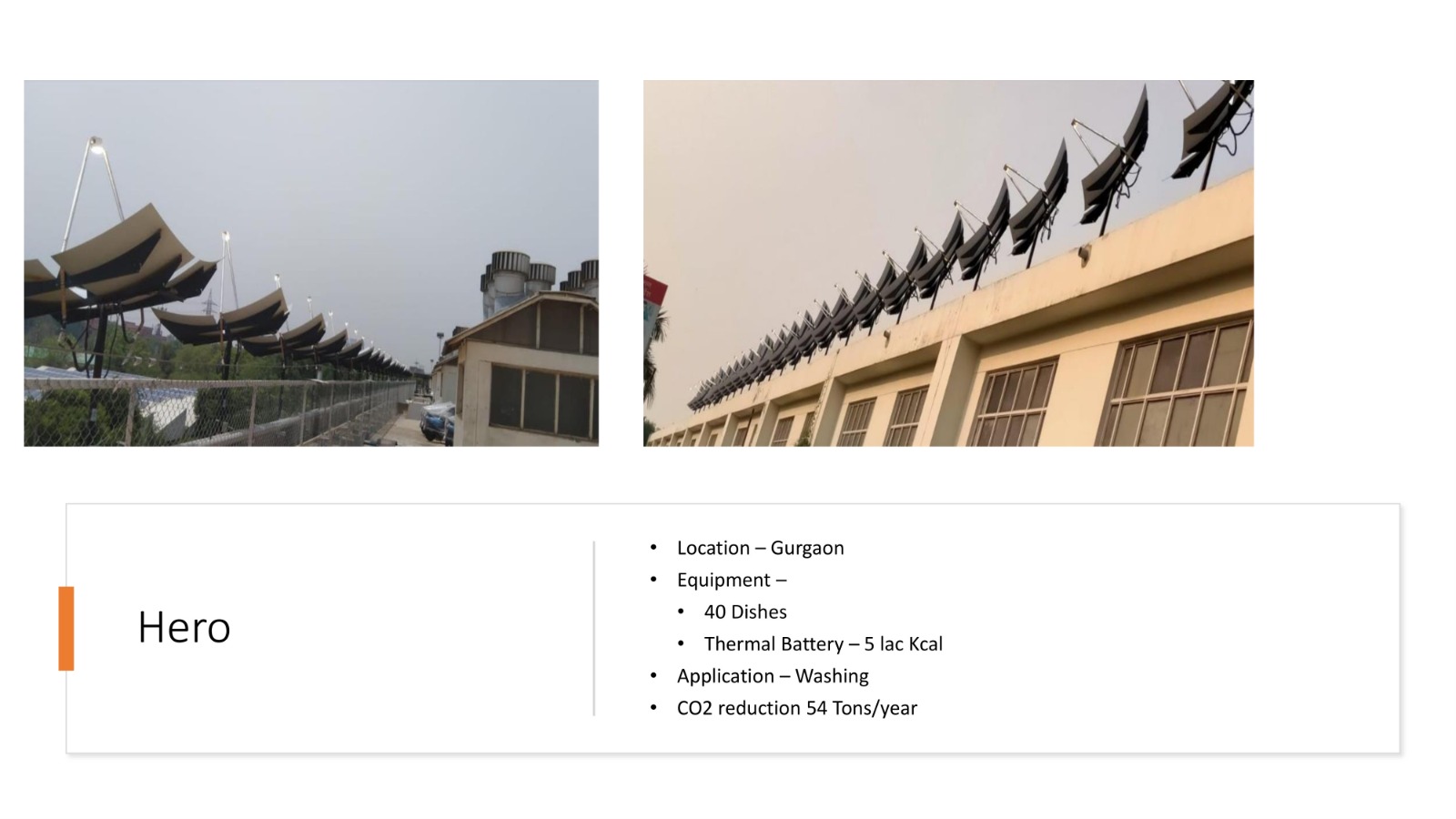
The system captures solar energy using CST dishes, which concentrate sunlight onto a receiver. That thermal energy is then used to heat wastewater in an evaporation chamber. As the water evaporates, contaminants are left behind as solid residue. The vapor is condensed and collected as clean, distilled water ready for reuse.
The numbers speak for themselves. Compared to conventional evaporators that rely on electricity or diesel, Quadsun’s solar evaporators use less than half the energy【9†L4-L5】. That is a 50 percent reduction in energy consumption for your wastewater treatment process.
Because the system runs on solar energy, it continues operating even during power outages—a critical advantage in areas with unreliable grid supply. And with zero ongoing fuel costs, the operational savings add up quickly.
Real-World Application: Who Is Using This Technology?
Solar-powered evaporation is not a theoretical concept. It is already being deployed across industries that face the toughest water challenges.
Industrial Effluent Treatment: Factories generating high-concentration effluent can use solar evaporators to reduce liquid waste volume dramatically, often achieving Zero Liquid Discharge without the massive electricity bills associated with conventional thermal evaporators.
Textile and Dyeing Units: The textile industry is one of India’s largest water consumers and wastewater generators. Solar evaporation offers a path to treat dye bath effluents without relying on grid power.
Pharmaceutical and Chemical Plants: These facilities often deal with complex effluents that cannot be discharged conventionally. Solar evaporators provide a clean, off-grid treatment option.
Common Effluent Treatment Plants (CETPs): Industrial clusters can deploy solar evaporators at centralised treatment facilities to reduce the burden on conventional treatment systems and lower overall energy costs.
Beyond Evaporation: Building a Complete Circular System
A true circular water economy goes beyond treating wastewater. It involves rethinking every point where water enters and leaves your facility.
Here is what a comprehensive circular water strategy looks like:
Step One: Reduce
Start by auditing your water use. Fix leaks. Install flow restrictors. Optimise cooling systems. Switch to dry cleaning methods where possible. Every liter you do not use is a liter you do not have to treat.
Step Two: Segregate
Different wastewater streams have different treatment requirements. Separate high-contaminant streams from low-contaminant streams. This allows you to apply targeted treatment rather than treating everything as hazardous waste.
Step Three: Reuse
Treated wastewater can be reused for numerous applications: cooling tower makeup, floor washing, landscaping, toilet flushing, and even process water in some industries. Match the water quality to the end use.
Step Four: Recycle
For the highest-value applications, advanced treatment including reverse osmosis and solar evaporation can produce distilled-quality water suitable for boiler feed or sensitive processes.
Step Five: Recover
Look beyond water itself. Valuable materials including salts, dyes, and chemicals can be recovered from wastewater during the evaporation process, creating additional revenue streams.
The Financial Case: What Does Circular Water Cost?
Let us talk numbers, because sustainability needs to make financial sense.
A typical industrial facility can expect:
Freshwater consumption reduction of 50 to 80 percent with comprehensive recycling
Payback periods of 2 to 4 years for solar evaporation systems, depending on local water and electricity costs
Zero Liquid Discharge compliance without the prohibitive electricity bills of conventional thermal systems
Protection from water price volatility and regulatory penalties
When you factor in the avoided cost of freshwater purchases, reduced wastewater discharge fees, and lower energy bills, circular water systems often deliver returns that rival or exceed traditional capital investments.
The Bigger Picture: Circular Economy and Climate Resilience
A circular water economy is not just good business. It is essential climate adaptation.
By 2030, India’s water demand is projected to reach 1.5 trillion cubic meters while supply stagnates around 1.1 trillion cubic meters. That gap is going to be filled somehow. Either industries invest in recycling now on their own terms, or they face supply disruptions and mandatory rationing later.
Companies that adopt circular water principles early will have:
Resilient water supplies regardless of drought conditions
Lower operating costs than competitors still reliant on freshwater
Stronger relationships with regulators and local communities
Better ESG ratings that attract investors and customers
Ready to Close Your Water Loop?
The linear water model is dying. Circular water is the future. And with solar-powered evaporation technology from Quadsun, that future is affordable, reliable, and ready today.
Whether you need to treat high-concentration effluent, achieve Zero Liquid Discharge compliance, or simply reduce your freshwater consumption, we have the expertise and technology to help.
Take the first step toward water independence.
📞 Contact Quadsun Technology for a free consultation on your facility’s water recycling potential. Our team will assess your wastewater streams, evaluate treatment options, and provide a clear roadmap to circular water operations.
Visit our website or reach out today. Because in a water-scarce world, the businesses that close the loop will be the ones that thrive.
Quadsun Technology — Powering India’s transition to a sustainable, circular future.


Leave A Comment