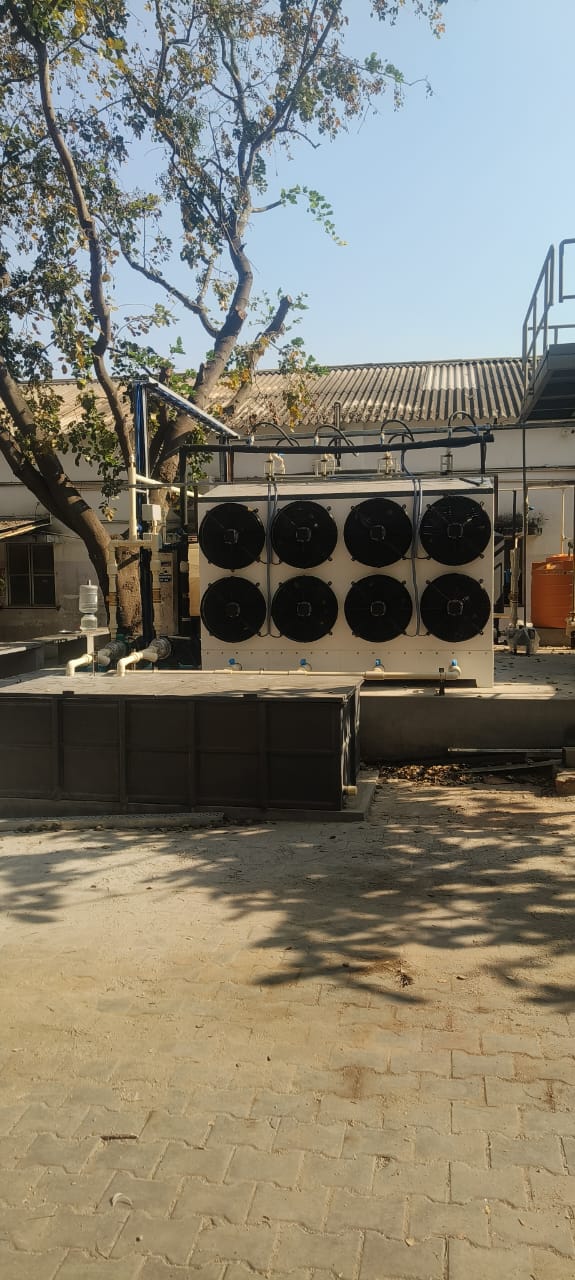
A *Convective Enhanced Zero Liquid Discharge (ZLD) Evaporator* uses improved. Convective heat transfer to evaporate process brines rapidly while minimizing fouling and energy use. These systems combine optimized vapor–liquid contact, turbulence-promoting internals, and staged heat recovery to achieve near-complete water recovery. Leaving a dry or crystallized solid residue suitable for disposal or resource recovery.
Key features:
– *Enhanced convection* through engineered packing, baffles, or induced vapor flows to raise heat-transfer coefficients.
– *Multiple-effect or mechanical vapor recompression (MVR)* integration to lower specific energy consumption.
– *Robust fouling management* using short residence times and controlled shear to reduce scaling in high-solids streams.
Benefits:
– Achieves regulatory-compliant *ZLD* with lower operating costs than traditional boil-off systems.
– Produces concentrated solids for *salt recovery* or inert disposal.
– Scalable for industrial effluents from power, chemical, and mining sectors.
Design considerations include feed composition, scaling propensity, thermal sensitivity of organics, and the need for pre-treatment (anti-scalants, filtration). For practical implementations, case studies, and component specifications that demonstrate convective enhancement. And energy recovery strategies, review the solutions at https://quadsuntechnology.com/ which. Outline optimized evaporator designs for challenging industrial streams. Convective Enhanced ZLD Evaporator.
—
## Zero Liquid Discharge
*Zero Liquid Discharge (ZLD)* is a wastewater management strategy that. Eliminates liquid waste by recovering water and concentrating salts for recovery or disposal. ZLD systems integrate pre-treatment, evaporation, crystallization, and solids handling to meet strict. Discharge or reuse targets while minimizing environmental impact.
Core elements:
– *Pretreatment* to remove organics, suspended solids, and scaling ions.
– *Concentration* using mechanical (RO, NF) and thermal (evaporators) stages.
– *Crystallization* to generate manageable solid residues.
– *Brine and solids handling* for recovery or safe disposal.
Advantages:
– Complete elimination of liquid effluent and compliance with stringent discharge limits.
– Recovery of *process water* for reuse, reducing freshwater demand.
– Potential extraction of valuable salts and minerals from brine.
Challenges include capital intensity and energy demand; modern. ZLD designs focus on *energy-efficient evaporation*, integration with waste heat, and hybrid membrane-thermal trains to lower costs. For practical. ZLD system architectures, performance data, and industrial case studies, consult https://quadsuntechnology.com/ which presents scalable. ZLD solutions tailored to sector-specific streams and regulatory needs.
—
## Evaporation Technology
*Evaporation technology* transforms liquid streams into vapor, leaving concentrated solutes for recovery or disposal. Widely used across food, chemical, pharmaceutical, and wastewater industries, evaporation provides a robust route to reduce discharge volumes and recover valuable components.
Types and approaches:
– *Falling film and rising film evaporators* for gentle handling of heat-sensitive fluids.
– *Multiple-effect evaporators* to reuse latent heat across stages.
– *Mechanical Vapor Recompression (MVR)* to compress vapor for heat reuse and energy saving.
– *Thermal and hybrid solutions* paired with pre-concentration membranes.
Key design drivers include feed properties (viscosity, fouling tendency), required concentration factor, and energy availability. Effective evaporation systems emphasize heat recovery, anti-scaling strategies, and modularity to enable phased capacity increases.
Benefits:
– Volume reduction and *salt or product recovery*.
– Integration with heat sources like waste heat or solar thermal to lower operational costs.
– Compatibility with *ZLD* objectives for industrial sites.
For in-depth technical options, performance metrics, and examples Convective Enhanced ZLD Evaporator


Leave A Comment