
We often think of evaporation as a simple, natural process—the sun drying a puddle after a rainstorm, or a pot of water boiling away on the stove. But in the industrial world, thermal evaporation is a critical, powerful technology. It’s the engine behind everything from concentrating valuable products to managing one of the biggest environmental challenges of our time: industrial wastewater.
But here’s the thing: traditional thermal evaporation can be an energy hog. It takes a lot of heat to turn a liquid into a vapor, and for decades, that has meant high operating costs and a significant carbon footprint for industries that rely on it. That’s where innovation steps in, and it’s changing the game completely.
What is Industrial Thermal Evaporation, Really?
At its core, industrial thermal evaporation does exactly what nature does, but in a controlled environment. We apply heat to a liquid to separate the water (which turns into vapor) from the dissolved solids or other components. The goal might be to concentrate a valuable product, like in the food industry, or to reduce the volume of liquid waste, making it cheaper and easier to handle.
The ultimate application of this is something called Zero Liquid Discharge (ZLD) . In a ZLD system, the aim is to treat wastewater until it’s so pure that it can be returned to the environment or reused in the facility, leaving behind only a solid waste (or a highly concentrated slurry). It’s a beautiful闭环 (closed-loop) solution, but the “thermal” part has always been the expensive hurdle.
The Old Way: A Necessary Evil?
For years, the go-to solutions for high-concentration evaporation were things like large evaporation ponds or brute-force heated evaporators. Evaporation ponds require vast amounts of land and are slow, and they can pose risks to local wildlife and groundwater. Traditional thermal evaporators, while faster, often rely on fossil fuels or large amounts of electricity to generate the necessary heat. They work, but they’re not exactly what you’d call sustainable.
A Smarter, More Sustainable Approach
This brings us to a pivotal question: what if you could harness the power of a free, sustainable energy source to drive this energy-intensive process? What if you could drastically cut both the operational costs and the environmental impact?
This is exactly the kind of thinking driving innovation at companies like Quadsun Technology. Their work embodies a shift from viewing thermal evaporation as a necessary utility expense to seeing it as a process that can be integrated with sustainable energy systems.
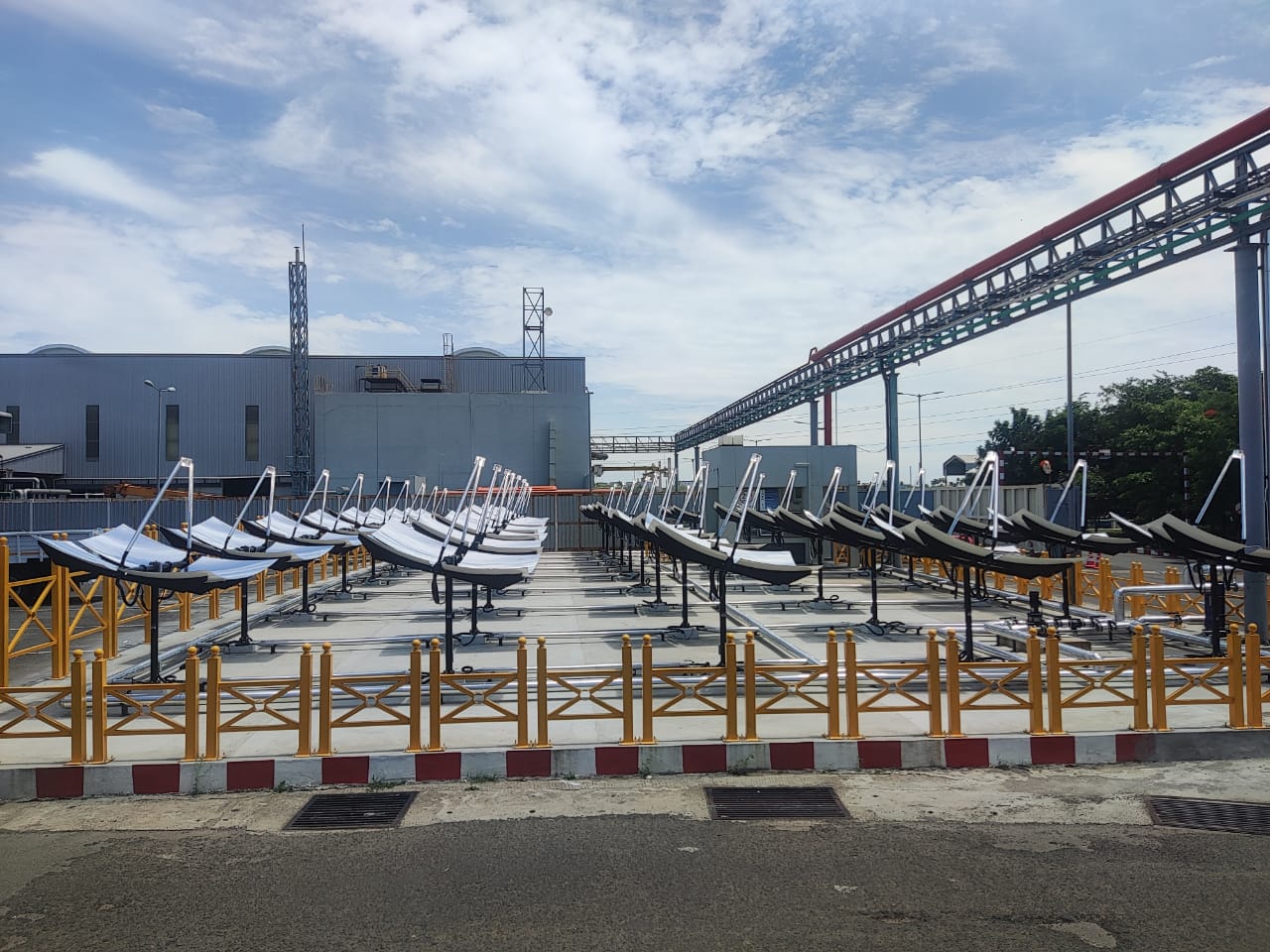
Take their Sustainable Energy Evaporator, for example. It’s not just another piece of industrial equipment; it represents a convergence of breakthroughs. We’re talking about advanced optics, thermodynamics, and precision engineering working in harmony. By leveraging these fields, they’ve created a Convective Enhanced Evaporator (CEE) designed specifically for ZLD applications. The goal is to achieve that complete separation of water and solids, but to do it in a way that is economical, reliable, and remarkably efficient.
The “secret sauce” lies in how it uses energy. Instead of simply burning fuel, these systems are designed to maximize the transfer of heat, often drawing from sustainable sources. This isn’t just good for the planet; it’s good for the bottom line. Lower energy consumption means lower operating costs, making ZLD a more viable option for a wider range of industries.
Why This Matters Now More Than Ever
Industries from power generation to textiles and mining are under increasing pressure to manage their water footprint responsibly. Regulations are tightening, and the cost of fresh water is rising. Thermal evaporation, especially when powered by sustainable methods, is emerging as a key technology for:
Water Recovery: Turning wastewater into a resource that can be reused in industrial processes, reducing the demand for fresh water.
Waste Minimization: Drastically reducing the volume of liquid waste that needs to be disposed of, cutting costs and environmental liability.
Resource Recovery: In some cases, the solids left behind after evaporation are valuable materials that can be recovered and sold.
The Future is Evaporating into View
The narrative around thermal evaporation is changing. It’s no longer just about applying heat until something boils. It’s about intelligent design, system integration, and energy optimization. The work being done by pioneers like Quadsun, with their deep focus on thermodynamics and sustainable energy, shows us a future where even the most challenging industrial problems have elegant, efficient solutions.
So, the next time you think of evaporation, don’t just think of a puddle drying in the sun. Think of the sophisticated, sustainable technologies that are quietly working behind the scenes, helping industries clean up their act and close the loop on one of our most precious resources: water.


Leave A Comment